I am commonly asked which improvements sellers should make to get the greatest return on their home sale. Every year The Remodeling 2018 Cost vs. Value Report (www.costvsvalue.com) compiles all the information and analyzes the estimated percentage return on home improvements in each region. Getting a home prepared for market requires a keen eye and great resources. To access the entire Cost vs. Value report please visit www.costvsvalue.com and follow the steps to locate the Seattle area report.
Also, I have a great list of reputable contractors from HVAC to plumbing to roofing who are licensed and bonded in the State of Washington. Please call on me whenever you need a solid recommendation. I am happy to help whether you are getting your home ready for market or just want to find a good window washer now that the sun is starting to shine a little more.
Complete data from the Remodeling 2018 Cost vs. Value Report can be downloaded free at www.costvsvalue.com
I hope your Valentine’s Day was a sweet one, but it got me thinking. I am often sharing with you the advantages of this market for home sellers, which is unbelievably positive. With that said, I thought I’d take some time to give the potential buyers in our marketplace some love, hope, and of course, data!
Dear Greater Seattle Home Buyer,
Let’s just be up front: buying a home in today’s market is not easy. Quite frankly, it can be a wild roller coaster ride with twists and turns; but remember, folks pay a lot of money and stand in long lines for roller coaster rides. Imagine the excited pit in your stomach as the cart clicks up to the highest point before you plunge down a steep drop, and the thrill of raising your hands up because you trust that you are going to be okay. These emotions also accurately reflect the feelings of today’s home buyer – it can be a wild ride! Let’s also note that many roller coaster riders return to the back of the line right after getting off. Home ownership is also a good exercise to repeat and is often the investment that leads to the most built wealth in one’s life.
So how does one ensure that they are not the Nervous Nelly who stands in line for over an hour, finally makes it to the front to be strapped in to the cart, but who then chooses to bow out? The one that sits on the sidelines watching others throw up their hands with a thrill in their eye; the one with that tinge of regret as their friends rejoin them back on hallowed ground to recount their adventure. Wow, this is getting dramatic! Here are a few tips to follow that will ensure that one can find success securing a home in today’s market and get on the equity building train.
Waiting is Even More Expensive
In 2017, the year-over-year median price gains across our region were strong. In fact, here is a little break down.
North Snohomish County:
$371,000
up 13%
South Snohomish County:
$508,000
up 14%
North King County:
$715,000
up 14%
Seattle Metro:
$710,000
up 15%
South King County:
$405,000
up 13%
Eastside:
$865,000
up 15%
The appreciation is for real and as each month ticks by, prices are going up. That is why it is incredibly important to have a plan and realistic expectations. In referring to the chart above, it is plain to see the affordability of each area. Buyers have had to get creative and honest with themselves regarding the city or neighborhood in which they land. Commute times are one of the biggest indicators of home cost. It is paramount to line your budget up with a realistic commute time and then dig in. Too often I’ve seen buyers tightly grip to the idea of an in-city commute, only to have it end up being a more suburban choice in the end. The months wasted trying to perform in a market that didn’t match their budget ended up costing them at least 1% a month, based on last year’s appreciation. Getting real saves time, money, and heartache.
Interest Rates are a’Rising
This aspect is actually one to pay very close attention to. We have been amazingly spoiled with historically low interest rates over the last five years. In fact, there is an entire generation of buyers who only know rates that have hovered from 3.5 – 4.5% – that is close to 3 points under the 30-year average! A good rule of thumb regarding interest rates, is that for each 1-point increase a buyer loses 10% of their buying power. That means that if you have a $500,000 budget and the rate goes up by a point, that you are now shopping for a $450,000 house if you want the same payment. Note, that shift does not take appreciation into consideration. Today’s rates have helped buyers bear the home prices in our area. It is predicted that rates will rise in 2018 by .5 to 1%.
Rents are High and Don’t Build Wealth
Seattle is now the 5th most expensive city to rent in the country according to the US Census Bureau. With rising rental rates, still historically low interest rates, and home prices on the rise, the advantage of buying versus renting has become clear for folks who have a down payment saved, good debt-to-income ratios and strong credit. Currently, the breakeven horizon (the amount of time you need to own your home in order for owning to be a superior financial decision vs. renting) in the Greater Seattle area is 1.6 years according to Zillow research.
Partner with a Broker Who Will Get the Job Done
A broker that has a process is key! It starts with an initial buyer consultation. I liken the buyer consultation to the seat belt you would wear on the roller coaster ride. When you go to the Dr. they start with your intake, check your vitals, ask questions, etc. The buyer consultation aims to unearth a buyer’s goals, research the areas they are interested in, address financing, and illustrate the challenges of the environment, so one can be successful. Time is money, and this consultation brings clarity, efficiency and trust. This upfront education coupled with a high level of communication and availability is paramount. The depth of the relationship will lead to success, and is the ingredient that enables a buyer to throw up their hands and take the thrilling plunge. It is hard to do that without a seat belt!
Get Your Finances in Order
Aligning with a trusted real estate professional is key, but so is aligning with a reputable and responsive mortgage lender. Getting pre-approved is the minimum, but getting pre-underwritten is a game changer. Finding a lender that is willing to put in the work up-front to vet credit, income, savings, debt, and all other financial indicators will lead to being pre-underwritten, which listing agents and sellers appreciate! Also, be aware that you do not always need to have a huge down payment to make a purchase work. Employment, assets, credit, and what you have saved all work into your ability to acquire a loan. I have seen plenty of people secure a home with 3-5% down. Education and awareness create clarity, and investing into understanding your financial footing equals empowered and more efficient decisions. Note that I mentioned “responsive”. This is a 24/7 market, and lenders who don’t work evenings and weekends can get in the way of a buyer securing a home. If you need a short list of lenders that fit this description, please contact me.
‘Tis the Season – Inventory is Coming
Have hope! This is the time of year where we see inventory climb month over month. There will be more selection, but bear in mind it is also the time of year that the appreciation push happens. If you are feeling 75-80% in love with a home, it is one to act on. You’re never going to “get it all”, so a willingness to focus on priorities will pay off, because waiting will have an expense.
If you or someone you know is considering a purchase in today’s market, please contact me. It is my pleasure to take the time to educate, devise a plan, and help buyers find success in a challenging, yet advantageous market.
Celebrate Earth Day with us! Bring all your sensitive documents to be professionally destroyed on-site by Confidential Data Disposal. Limit 20 file boxes per customer.
We will also be collecting non-perishable food and cash donations to benefit Concern for Neighbors Food Bank. Donations are not required, but are appreciated.
*This is a shredding-only event. Only paper will be accepted – no electronics or recyclables.
We are so fortunate here at Windermere to have Matthew Gardner help keep us informed on our economy and the real estate market. Each quarter Matthew compiles in-depth research on counties from across Western Washington. Click here to download Matthew’s full Q4 2017 report. Also, I recently hosted Matthew’s 2018 economic forecast for the Greater Seattle area and had it professionally recorded. If you are interested in receiving access to view the entire presentation, please contact me and I’ll send it to you.
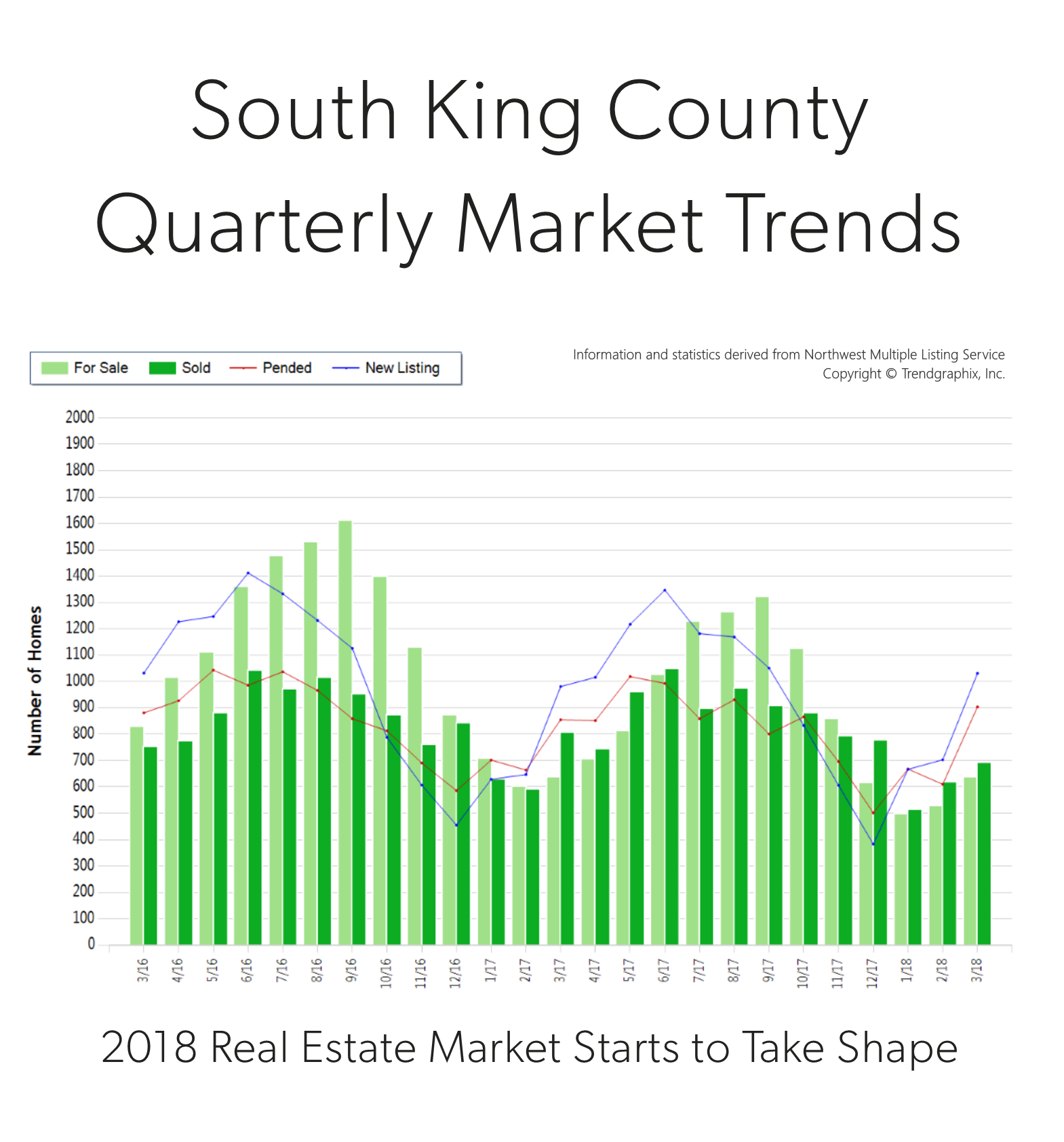
Price growth was particularly strong in 2017! Median was up 13% and average price up 12% over 2016. Median price in 2017 landed at $405,000 and the average at $440,000. The average amount of days it took to sell a house in 2017 was 30 days which is 9% faster than 2016. The average list-to-sale price ratio over the last year was 100%, with the spring months as high as 102%! In 2017, inventory growth continued to be a challenge, with a 7% decrease in new listings compared to 2016. Even with inventory limitations there were 2% more sales! This phenomenon illustrates strong buyer demand and a need for more listings.
South King County real estate has seen a steady stream of buyers come our way due to affordability, reasonable commute times and quality of life. In fact, the median price in 2017 was 75% higher in Seattle Metro. Historically low interest rates continue to drive the market as well, they have helped offset the increase in prices. Sellers are enjoying great returns due to this phenomenon and buyers are securing mortgages with minor debt service.
This is only a snapshot of the trends in south King County; please contact me if you would like further explanation of how the latest trends relate to you.
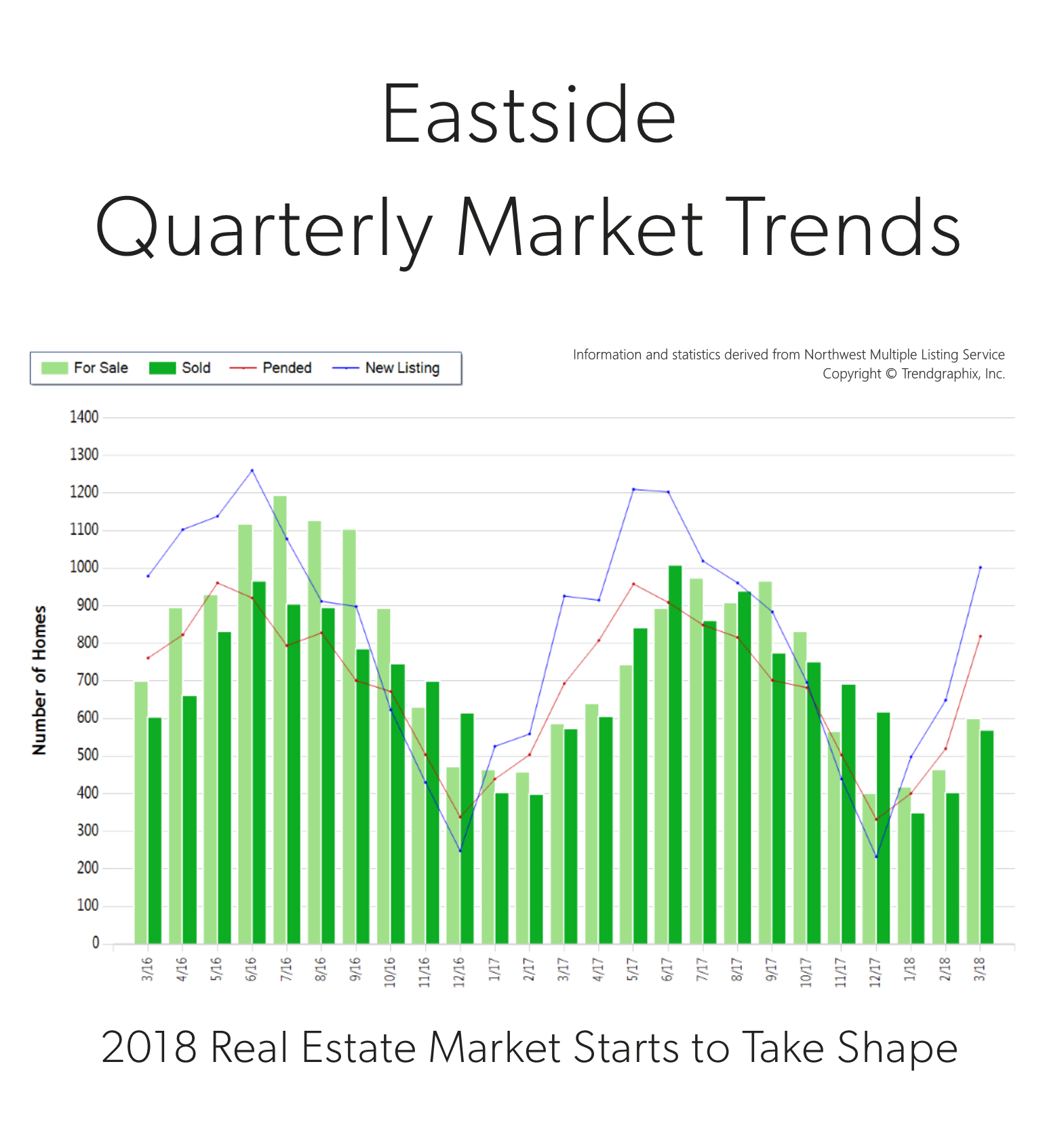
Price growth was particularly strong in 2017! Median was up 15% and average price up 16% over 2016. Median price in 2017 landed at $865,000 and the average at $1,049,000. The average amount of days it took to sell a house in 2017 was 24 days, which is 17% faster than 2016. The average list-to-sale price ratio over the last year was 101%, with the spring months as high as 103%! In 2017, inventory growth continued to be a challenge, with a 4% decrease in new listings compared to 2016. Even with inventory limitations there were a near equal amount of sales! This phenomenon illustrates strong buyer demand and a need for more listings.
Demand for Eastside real estate has grown due to close proximity to job centers, great schools and quality of life. Over the last year, the Eastside was 70% more expensive than south Snohomish County and 22% over Seattle Metro. Historically low interest rates continue to drive the market as well, they have helped offset the increase in prices. Sellers are enjoying great returns due to this phenomenon and buyers are securing mortgages with minor debt service.
This is only a snapshot of the trends on the Eastside area; please contact me if you would like further explanation of how the latest trends relate to you.
Price growth was particularly strong in 2017! Median was up 15% and average price up 14% over 2016. Median price in 2017 landed at $710,000 and the average at $801,000. The average amount of days it took to sell a house in 2017 was 18 days, which is 10% faster than 2016. The average list-to-sale price ratio over the last year was 103%, with the spring months as high as 106%! In 2017, inventory growth continued to be a challenge, with a 3% decrease in new listings compared to 2016. Even with inventory limitations there were 4% more sales! This phenomenon illustrates strong buyer demand and a need for more listings.
Demand for Seattle Metro area real estate has grown due to close proximity to job centers. Over the last year, Seattle Metro was 40% more expensive than south Snohomish County and 75% over south King County. Historically low interest rates continue to drive the market as well, they have helped offset the increase in prices. Sellers are enjoying great returns due to this phenomenon and buyers are securing mortgages with minor debt service.
This is only a snapshot of the trends in the Seattle Metro area; please contact me if you would like further explanation of how the latest trends relate to you.
Price growth was particularly strong in 2017! Median and average prices were up 14% over 2016. Median price in 2017 landed at $715,000 and the average at $787,000. The average amount of days it took to sell a house in 2017 was 17 days, which is 19% faster than 2016. The average list-to-sale price ratio over the last year was 104%, with the spring months as high as 107%! In 2017, inventory growth continued to be a challenge, with a 4% decrease in new listings compared to 2016. Even with inventory limitations there were a near equal amount sales! This phenomenon illustrates strong buyer demand and a need for more listings.
Demand for north King County real estate has grown due to close proximity to job centers while maintaining a neighborhood feel. Over the last year, north King County was 41% more expensive than south Snohomish County and 77% over south King County. Historically low interest rates continue to drive the market as well, they have helped offset the increase in prices. Sellers are enjoying great returns due to this phenomenon and buyers are securing mortgages with minor debt service.
This is only a snapshot of the trends in north King County; please contact me if you would like further explanation of how the latest trends relate to you.
Price growth was particularly strong in 2017! Median was up 14% and average price up 12% over 2016. Median price in 2017 landed at $508,000 and the average at $543,000. The average amount of days it took to sell a house in 2017 was 24 days, which is 17% faster than 2016. The average list-to-sale price ratio over the last year was 101%, with the spring months as high as 103%! In 2017, inventory growth continued to be a challenge, with a 1% decrease in new listings compared to 2016. Even with inventory limitations there were 4% more sales! This phenomenon illustrates strong buyer demand and a need for more listings.
South Snohomish County real estate has seen a steady stream of buyers come our way due to affordability, reasonable commute times to job centers and quality of life. In fact, the median price in 2017 was 41% higher in north King County. Historically low interest rates continue to drive the market as well, they have helped offset the increase in prices. Sellers are enjoying great returns due to this phenomenon and buyers are securing mortgages with minor debt service.
This is only a snapshot of the trends in south Snohomish County; please contact me if you would like further explanation of how the latest trends relate to you.
Price growth was particularly strong in 2017! Median and average prices were up 13% over 2016. Median price in 2017 landed at $371,000 and the average at $400,000. The average amount of days it took to sell a house in 2017 was 35 days, which is 10% faster than 2016. The average list-to-sale price ratio over the last year was 99%, with the spring months as high as 101%! In 2017, inventory growth continued to be a challenge, with an 8% decrease in new listings compared to 2016. Even with inventory limitations there were 3% more sales! This phenomenon illustrates strong buyer demand and a need for more listings.
North Snohomish County real estate has seen a steady stream of buyers come our way due to affordability and quality of life. In fact, the median price in 2017 was 37% higher in south Snohomish County. Historically low interest rates continue to drive the market as well, they have helped offset the increase in prices. Sellers are enjoying great returns due to this phenomenon and buyers are securing mortgages with minor debt service.
This is only a snapshot of the trends in north Snohomish County; please contact me if you would like further explanation of how the latest trends relate to you.
by Bill Clarke, Director of Public Policy | Jan 19, 2018
The Governor has signed SB6091, a REALTOR® supported bill, to fix the State Supreme Court’s Hirst Growth Management Act decision regarding water availability for new private wells.
The final Hirst legislation includes the following components:
For local building permit and subdivision decisions, local governments do not have to review new exempt wells for “impairment” of instream flows. This reverses the basic legal conclusion of the Supreme Court’s Hirst decision.
For projects in basins with Ecology-adopted exempt well limits or mitigation requirements,those rules still govern. In other basins, specific allowances for new wells are created in statute. The limit is 950 gallons per day average annual use per connection; other basins are up to 3,000 gallons per day; while other basins (non-GMA counties or areas with no instream flow rules) can again operate under the 5,000 gallon per day exempt well limit.
Certain areas of state are excluded from the billand thus these exempt well allowances: the Skagit Basin, and the Yakima Basin (Kittitas, Yakima, and parts of Benton County).
Existing wells are grandfathered, and deemed to have satisfied the requirement to have a legal water supply under the State Building Code.
The bill allows local governments to rely on existing Department of Ecology rules for purposes of meeting the requirements of the Growth Management Act.
There are no new mitigation or metering requirements tied to well construction or new building permits, and there is a one-time fee of $500.
Additionally:
Local committees are established to identify projects to offset impacts to instream flows. The scope and composition of these committees varies by whether the county completed a Watershed Plan under the state’s Watershed Planning Act. Local committees may recommend rulemaking changes to Ecology, but the committees themselves are not regulatory. Ecology retains its current rulemaking authority.
$300 million ($20 million per year over 15 years) is allocated to fund projects and local planning efforts to restore instream flows and aquatic habitat.
Certain cities and water purveyors are allowed to proceed with water rights permitting, and a Legislative Task Force is established to make recommendations on how new water rights for municipal uses can be mitigated.
The attached table, prepared by the Washington Water Policy Alliance, has a basin-by-basin breakdown of the applicable exempt well allowances.
Questions on the Hirst Decision?
Email Bill Clarke, Director of Public Policy
Washington REALTORS®
WRIA disposition in Proposed SSB 6091
Source: Prepared by WWPA – January 18, 2018
#
WRIA name
ISF status
Exempt
Limit on GPD
1
Nooksack
Pre 1990
Up to 3,000 gpd
2
San Juan
None
3
Lower Skagit Samish
Post 2001 (really pre – reverted to old rule)
Yes – Ct. Dec.
4
Upper Skagit
Post 2001 (really pre – reverted to old rule)
Yes – Ct. Dec.
5
Stillaguamish
NEW
6
Island
None
7
Snohomish
Pre 1990
950 gpd
8
Cedar Sammamish
Pre 1990
950 gpd
9
Duwamish Green
Pre 1990
950 gpd
10
Puyallup White
Pre 1990
950 gpd
11
Nisqually
Pre 1990
Up to 3,000 gpd
12
Chamber Clover
Pre 1990
950 gpd
13
Deschutes
Pre 1990
950 gpd
14
Kennedy Goldsborough
Pre 1990
950 gpd
15
Kitsap
Pre 1990
950 gpd
16
Skokomish Dosewallips
None
17
Quilcene Snow
NEW
18
Elwah Dungeness
NEW
19
Lyre Hoko
None
20
Soleduc
None
21
Queets Quinault
None
22
Lower Chehalis
Pre 1990
Up to 3,000 gpd
23
Upper Chehalis
Pre 1990
Up to 3,000 gpd
24
Willapa
None
25
Grays Elokoman
Proposed
26
Cowlitz
Proposed
27
Lewis
NEW
28
Salmon Washougal
NEW
29
Wind White Salmon
None
30
Klickitat
None
31
Rock Glade
None
32
Walla Walla
NEW
33
Lower Snake
None
34
Palouse
None
35
Middle Snake
None
36
Esquatzel Coulee
None
37
Lower Yakima
Adjudicated
Adjudicated
38
Naches
Adjudicated
Adjudicated
39
Upper Yakima
Adjudicated
Adjudicated
40
Alkaki Squilchuck
None
41
Lower Crab
None
42
Grand Coulee
None
43
Upper Crab Wilson
None
44
Moses Coulee
None
45
Wenatchee
NEW
46
Entiat
NEW
47
Chelan
None
48
Methow
NEW
49
Okanogan
Pre 1990
Up to 3,000 gpd
50
Foster
None
51
Nespelem
None
52
Sanpoil
None
53
Lower Lake Roosevelt
None
54
Lower Spokane
None
55
Little Spokane
Pre 1990
Up to 3,000 gpd
56
Hangman
None
57
Middle Spokane
NEW
58
Middle Lake Roosevelt
None
59
Colville
Pre 1990
Up to 3,000 gpd
60
Kettle
None
61
Upper Lake Roosevelt
None
62
Pend Oreille
None
LEGEND
BLUE
NEW ISF rules (post 2001) – will follow restrictions in current Ecology rules
YELLOW
OLD instream flow rules that have a watershed plan and will use watershed planning format for recommendations
GREEN
OLD instream flow rules that do not have a watershed plan or have a partial plan and will use Watershed Restoration and Enhancement Committees for recommendations
GREY
WRIAs that are exempt from coverage in bill
NO COLOR
No instream flow rule and no restrictions under bill – can use current law – up to 5,000 gpd
It is the time of year when I like to re-cap the price premiums in our area based on commute times. The price divide continued in 2017 between key market areas in the Greater Seattle area based on proximity to major job centers. These pricing premiums have cemented the drive-to-qualify market. Seattle proper has always been more expensive than its neighboring suburbs, but the most current prices illustrate the extreme value of a shorter commute.
In 2017, the average sales price for a single-family residential home in the Seattle Metro area was $801,000, up 14% from the year prior! In south Snohomish County (Everett to the King County line) the average sales price for a single-family residential home in 2017 was $543,000, up 12% from the year prior, however 48% less expensive than Seattle Metro.
Further, if you jump across Lake Washington to the Eastside, the average sales price in 2017 for a single-family residential home was $1,049,000, up 16% from the year prior and 31% more expensive than Seattle Metro! The Eastside has the infrastructure to support their own job centers, making it a second “Seattle”, with the benefit of newer and larger housing stock, which reflects the pricing. Many folks are living and working on the Eastside, or using the 520 toll bridge to jump over to Seattle.
In 2017, closed transactions were up 4% in south Snohomish County despite fewer new listings coming to market, which I think was driven by its affordability compared to Seattle and the Eastside. Snohomish County offers lower prices, larger houses and yards, new construction, lower taxes, strong school district options and longer, yet manageable commute times. Newer transit centers and telecommuting have also opened up doors to King County’s little brother to the north.
Another hot button that has continued to influence pricing is the future expansion of Light Rail and the locations of the planned stations. We have seen home values in these areas sell at a premium as consumers anticipate the shorter commute times the rail will bring. These neighborhoods are experiencing zoning changes now and the additional expansion is being phased in over the course of the next 15 years. There will be more multi-family and commercial development in these areas, creating more density to serve the public using these commuting services. This has created great appeal for homeowners that want to get in on the ease of nearby public transportation, and developers eager to be part of the infrastructure growth. Stations at Northgate, 145th & 185th in Shoreline, Mountlake Terrace and Lynnwood are all slated to open over the next 3-6 years.
No matter which neighborhood you are interested in learning about, in either King or Snohomish County, I am happy to provide a 2017 re-cap of that market. I work in both counties and understand each of their nuances. 2017 was another eventful year in real estate and we are looking for that to continue in 2018. With these strong market prices, we hope to see an increase in inventory levels, providing more options for buyers and allowing price growth to temper to sustainable levels. Check out the article below that touches on Matthew Gardner’s, Windermere’s Chief Economist, 2018 predictions for the national housing market. I attended his local forecast this week and if you’d like a copy of his presentation, outlining what he thinks is in store for our area, please email me. I’d be happy to forward it along and explain his findings. Here’s to a successful 2018!